



Belarusian startups in Poland: jobs, technology, and the quiet expansion of the labor market
Context: For the past few years, Poland hasn’t just been “welcoming IT people” — it’s been absorbing entire product teams, founders, and future export-driven businesses. By many estimates, a noticeable share of Belarusian ICT specialists moved specifically to Poland back in 2020–2021.
Mechanics: The state-backed Poland.Business Harbour program was designed as a “relocation package” for IT specialists, startups, and companies — coordinated at the ministerial level together with PAIH.
Fact: In 2020–2023 alone, industry overviews suggest that more than 150 Belarusian startups relocated abroad, and Poland became one of the key “safe harbors.”
Belarusian startups in Poland: who already “popped” and who’s about to take off
Frame: If you’re Polish and thinking, “Okay — but what does Poland actually get out of this?”, the answer is brutally pragmatic: new jobs, more taxes paid locally, export revenue, hard product-building know-how, and sharper competition for quality. Add to that a faster digital upgrade of small business — and SMEs are the backbone of the Polish economy.
Belarusian startups in Poland: 7 “rising stars” (BelTech / Warsaw)
Source: At BelTech Global in Warsaw, seven “rising” startups with Belarusian roots were showcased — a solid snapshot of what’s being built right next to us, not “somewhere in Silicon Valley.”
Skarbe: AI sales without bureaucracy (and without the CRM pain)

Key: Skarbe is a personal AI sales assistant that removes the grind: auto-logging conversations, suggesting the next best step, drafting follow-ups, and moving deals forward without “spreadsheet slavery.”
Money: The team publicly mentioned a $600k pre-seed round (June 2025) — meaning the product has already passed an investor sanity check, and the next stage is usually hiring: engineers, analysts, support, marketing.
Value for Poland: Lower barriers to exporting B2B services from Poland (small companies sell abroad faster), plus jobs in product development.
Smakoza: a digital kitchen for restaurants instead of aggregator commissions
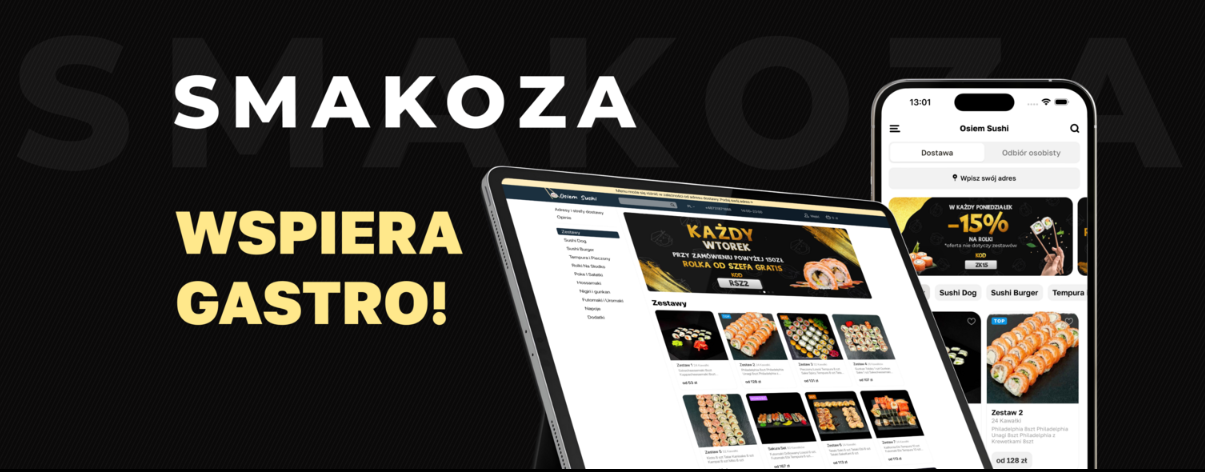
Key: Smakoza is a turnkey stack for restaurants: a branded app, website, QR menu, CRM, RFM analytics, loyalty, push notifications, and a marketing toolkit — plus a POS/ERP layer for operations.
Value for Poland: It hits a core pain in Polish HoReCa — dependence on aggregators and expensive customer acquisition. When a restaurant builds a direct channel, it more often hires “in-house” (marketing, delivery, operations) instead of handing margin to platforms.
Lea AI: a personal “skin-health” platform and smarter health data use

Key: Lea AI builds a digital “skin passport”: image analysis, environmental factors (UV, humidity, pollution), personalized recommendations — potentially even linking to medical records/predispositions (as the project claims).
Value for Poland: Growth in health/beauty tech and demand for specialists (ML/vision, privacy, medical content, clinic partnerships). This isn’t influencer cosmetics — it’s an attempt to make the market more evidence-driven.
Campaignswell: predictive analytics for ad budgets

Key: Campaignswell brings predictive analytics to performance businesses: finding high-LTV customers and scaling ad spend without “burning money.”
Value for Poland: Polish e-commerce and mobile apps have lived in a world of expensive traffic for years. Tools that reduce waste increase profitability — and profitable companies hire and pay taxes.
WABB: WhatsApp automation for SMEs — 24/7 without exploding costs

Key: WABB is a no-code WhatsApp automation platform: a chatbot builder, integrations, and automations so SMEs can run sales and support “always-on” without growing headcount just to keep up.
Local reality: The CEO lists Warsaw as a location — meaning the team’s “center of gravity” is genuinely in Poland.
Value for Poland: SMEs get “enterprise-light” tooling, which raises productivity. In practice, the labor market grows not by headcount, but by quality: higher value per hour, higher output.
Unschooler: corporate training you can assemble in 15 minutes

Key: Unschooler is an AI platform for companies: mapping employee skills to business goals and generating courses for skill gaps “in 15 minutes,” with a personal AI assistant built on internal knowledge bases.
Value for Poland: The labor market doesn’t win only through hiring — it also wins through upgrading skills inside Polish companies, especially outside Warsaw where “poaching talent” is expensive.
Trona: AI Hiring Engine — recruiting without noise and manual grind

Key: Trona positions itself as an autonomous hiring system embedded into communication channels before ATS/HRIS — automating “noise,” scaling conversations, and focusing humans on high-quality decisions.
Value for Poland: In a talent-short market, whoever hires faster and more accurately wins. Faster hiring = faster growth = more jobs across the chain.
Belarusian companies in Poland: when a “startup” becomes a jobs factory
Game-dev anchor: Wargaming has publicly announced offices in Warsaw and Belgrade with potential “up to 400 employees” in total, positioning Warsaw as a growth point during restructuring after exiting the RU/BY markets.
What it means for Poland: This is no longer “two founders with laptops.” It’s an industry with stable salaries, vendor chains, and a cluster effect (game art, QA, localization, marketing, audio).
SaaS anchor: PandaDoc and the Warsaw hub effect
SaaS anchor: PandaDoc publicly mentions Warsaw among its hubs/office locations (alongside Lisbon and Kyiv) and hires with those locations in mind.
Narrative: Even when a company is global, a “Warsaw hub” means salaries, taxes, office rent, services — and an ecosystem around it (recruiters, lawyers, accounting, coworking).
Jobs and the labor market: why Poland wins here
Jobs: Growth-stage startups hire broadly — engineers, product, sales, customer success, marketing, finance, legal. And crucially, many roles are created locally because selling and supporting customers is tied to EU time zones, languages, and regulations.
Exports: When a product sells into the US/EU, revenue flows into the Polish jurisdiction and feeds the local economy even without a massive domestic market.
Competition: Belarusian teams brought a strong product-building school to Poland and push the local market to mature faster (it can sting, but it works).
Outlook: how Belarusian startups “tighten the bolts” of Poland’s economy
Scenario: If Poland continues acting like a pragmatic hub (visas/legal pathways, clear rules of the game, access to capital, respect for entrepreneurs), Belarusian teams won’t be “guests” — they’ll become local employers.
Conclusion: For Poles, the deal is simple: give clear jurisdiction and infrastructure — get product companies, jobs, and exported technology in return. And the best part is: it happens without grand slogans. People just show up and build.